image

While cleansing and storing water naturally, healthy forests sustain our forestry industry, recreational space, and viewshed.

Introduction

The roots of the WAC Forestry Program education efforts can be found in a set of position statements and policy recommendations called the “Green Book”. The “Green Book” and its recommendations were created in 1996 by the Watershed Forestry Task Force. Each recommendation is intended to improve the economic viability of forest land ownerships and the forest products industry to benefit local communities in the NYC watershed in ways compatible with water quality protection and sustainable forest management. The two recommendations identified by the Watershed Forestry Task Force that apply directly to education are:

Recommendation #1: Educate the general public regarding the relationships between watershed land uses, forest management, water quality protection and rural economic viability. Education and outreach, including press releases, informational materials, and roundtable discussions sponsored in local communities, will enable town planning boards, local officials and citizen advisory committees to better understand forest-related issues.

Recommendation #5: Strengthen current education and outreach efforts to private forest landowners to promote greater awareness of water quality considerations and encourage the creation and implementation of long-term forest management plans that are economically viable and protect water quality.

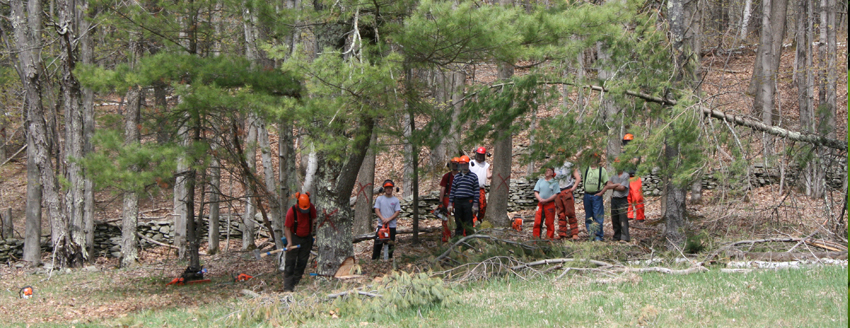
Over the past twelve years the WAC Forestry Program has used these two recommendations to refine its education efforts into three primary categories: Landowner Education, Logger & Forester Training and Urban/Rural School Based Conservation Education. In recent years effort has also been made to target municipal officials with education activities in an effort to provide municipalities with the information they need to effectively steward their communities. Although limited, the WAC Forestry Program has also continuously maintained a component of education targeted at the general public as well as any environmental groups, agencies and policy makers that maintain an interest in the stewardship of watershed forests. As a result of current Program structure the primary target audiences for education efforts are: loggers, landowners, foresters, teachers and school age youth from the upstate watershed region and the NYC metropolitan area. Secondary target audiences are: municipal officials, forest industry, and the general public.

Watershed Education Forestry Education